
Each year, the .ORG Impact Awards spotlight organizations creating meaningful change around the world, but some of the most powerful impact cannot be measured overnight.
For organizations like Kula Project, a 2025 .ORG Impact Awards finalist, success is not defined by quick wins, but by long-term transformation. We spoke with their team about what it takes to communicate impact that unfolds over years, not just moments. Their insights offer an important lesson for nonprofits everywhere: when your mission is rooted in deep, systemic change, communicating progress requires clarity, trust, and a commitment to bringing supporters into the full journey.
How do you communicate long-term impact before final outcomes are visible?
At Kula, we are firm believers in the old adage that good things take time,especially when it comes to the kind of change we’re working toward with coffee farming families in Rwanda. Coffee trees take approximately three years to grow and mature before producing fruit. New businesses take time to find their footing, build markets, and move from survival to stability. Mindset change doesn’t happen overnight. Through years of partnering with farmers to grow prosperity, we’ve learned there’s a meaningful difference between shallow outcomes and deep, transformative change. Real, lasting impact – the kind that lifts families out of poverty permanently rather than temporarily, and the kind we’re trying to create – requires work and investment that compounds slowly and builds over time.
Figuring out ways to effectively communicate that has been a learning process of its own. We’re always working to find better ways to tell that story, and while we don’t claim to have it fully figured out, our commitment to bringing people into that journey and the stories of the people we work alongside allows our communication to reflect the beauty and complexity of this work.
Practically speaking, to demonstrate meaningful progress before final outcomes are reached, we’ve built a system of learning from and communicating our impact through a milestone approach that reflects how our programmatic results actually unfold. We track individual progress and early implementation during the program itself, assess initial outcomes at program exit, and then follow graduates annually for four years after they leave — measuring changes in the short-, medium-, and long-term. This structure gives our community something meaningful to engage with at every stage.
What are the biggest challenges in communicating long-term, layered impact?
We live in a world that appeals to short attention spans and rewards quick results and instant feedback, and the funding landscape often reflects that. Many funders and supporters understandably want to see returns on their investment. Yet, waiting years for the full picture of impact to emerge requires a level of understanding and trust that not everyone is positioned to offer, which can be a huge challenge and missed opportunity for collaboration. However, we’ve come to see our commitment to long-term impact not as a weakness , but as a signal of integrity, and increasingly, as a way of finding partners who are excited about joining us on the journey to create sustainable change.
How do you balance data and storytelling to communicate impact effectively?
Data matters deeply to us. It gives us and our supporters an aggregate, overarching view of progress and results, and creates the foundation of our credibility, programmatic efficacy, and internal feedback loops. But numbers alone rarely move people, stories do.
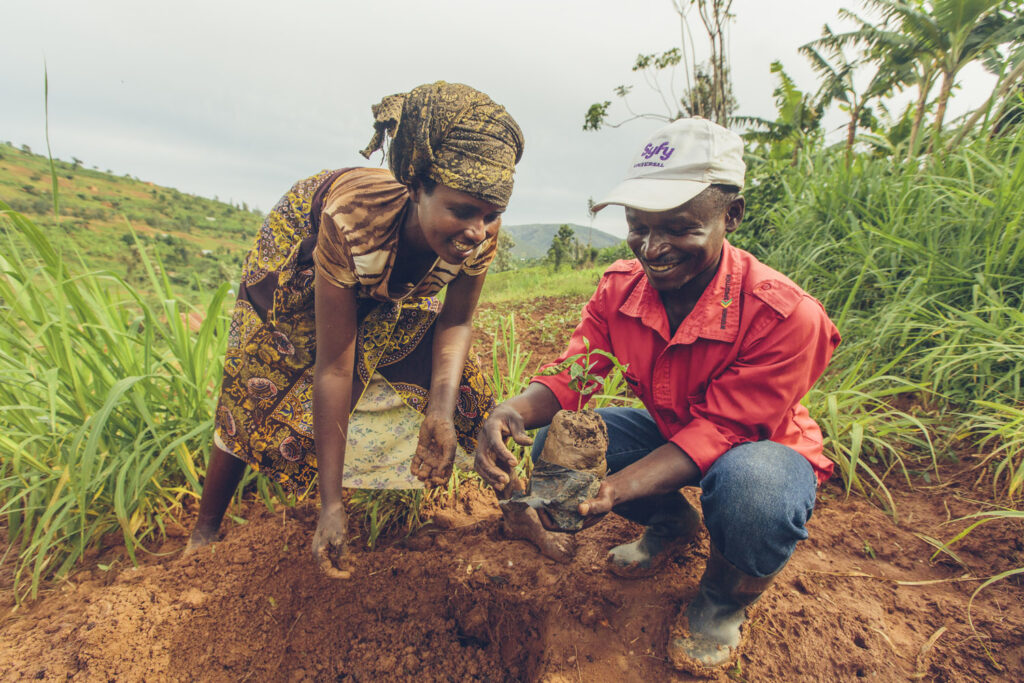
When you hear that Fellows in our program on average triple their household income within one year of graduating, that’s significant. But when you hear that Claudine and Joseph increased their income by over 300% — consistently putting nutritious food on the table, launching new household enterprises, and sending their kids to school — that’s when the number becomes real. Claudine puts it simply: “Paying school fees used to be a burden. Now, it’s easy.” That’s what enables our community to understand not just what changed, but what that change means.
We’ve found that data and story aren’t in competition — they make each other stronger. Data gives the story its credibility and scale. The story gives data its humanity and meaning. The goal is always to hold both at once.
What matters most when communicating impact to supporters?
When communicating impact, we prioritize simplicity, transparency, and the balance between data and stories.
Simplicity starts with our metrics. Through our Monitoring, Evaluation, Accountability, and Learning (MEAL) framework, we measure and analyze hundreds of indicators — data that is invaluable internally for understanding how to make our program more effective and where to direct our attention and resources. And for audiences that want to go deeper, we’re always ready with more detailed analysis and reporting. But, we’ve learned that for broader audiences, less is more. We’ve worked hard to identify the key metrics that most meaningfully capture our impact — household income, coffee harvest, and income diversification — and lead with those consistently, because we never want the volume or complexity of our data to become a barrier to understanding.
Transparency is also a top priority. We don’t inflate our results nor do we obscure them when they’re complicated. We see impact data as information to celebrate, share, and learn from. We present our impact data in its truest and most accurate form, and are equally transparent about the process behind how that impact is determined.
Lastly, we prioritize the balance between numbers and people, data and stories, and we hold both with equal importance. Numbers give impact its credibility and scale; stories give it its tangible meaning. Depending on the audience and the context, we might lead with one or the other, because each speaks to different people in different ways. It’s the combination of the two that we believe gives our community the fullest, most honest picture of our work and the transformation it creates in people’s lives.
What role do stories play in bringing your impact to life?
To put it simply: stories are what brings our impact to life.
Stories have been at the heart of how Kula communicates since the very beginning. As a team, we are genuinely moved and motivated by the people we work alongside. Their transformation, their resilience, their vision for their families – that’s the change we’re working to see. When we share those stories, we’re not just employing a communications tactic. We’re sharing what drives us.
Stories also serve a critical function for connecting people to our work, especially those who live and work far outside the context of rural, developing communities in Rwanda. While our work might be challenging for some people to connect with or understand, most people understand the universal human experience of wanting to build a better, more prosperous life for yourself and the people you love and care for. Stories are the bridge between that shared understanding and the specific reality of what our work produces.
What advice would you give nonprofits working to communicate complex, long-term impact?
Communicating long-term, complex impact is something we continue to wrestle with, learn from, and improve — and we think that posture of ongoing learning is itself part of the answer. While we don’t claim to have this fully figured out, we have learned a lot along the way and are happy to share those learnings with fellow organizations fighting that same fight!
We have found there is so much strength and connection found in bringing people into the beauty, complexity, and reality of the work you’re doing. This work is often hard and nuanced and that’s worth acknowledging. Bringing supporters into that reality — the challenges, the lessons learned, the things that didn’t go as planned — builds credibility and connection. At the same time, complexity should never become a barrier to understanding. Meet people where they are and find the through lines that connect your mission to shared experiences and values. And always, always connect your numbers to the real stories and real people they represent — because data tells people what changed, but stories tell them why it matters.
For nonprofits working to communicate long-term impact, Kula Project’s experience offers three powerful lessons:
- Show progress through meaningful milestones. Sustainable transformation rarely happens overnight, so breaking impact into clear stages helps supporters stay engaged and understand growth along the way.
- Use both data and stories to build trust. Metrics establish credibility, while human stories create emotional connection. Together, they provide the clearest and most compelling picture of change.
- Lead with transparency. Being honest about complexity, challenges, and the time required for real impact builds stronger relationships with supporters who value sustainable solutions.
Long-term impact storytelling is not about simplifying the journey—it is about helping people understand why lasting change is worth investing in. By combining clarity, credibility, and connection, nonprofits can strengthen trust, deepen support, and bring their communities alongside them for the full path to transformation.
To learn more about Kula Project and discover other mission-driven organizations creating lasting global change, explore the .ORG Impact Awards community.