
Letting Go of the Lens
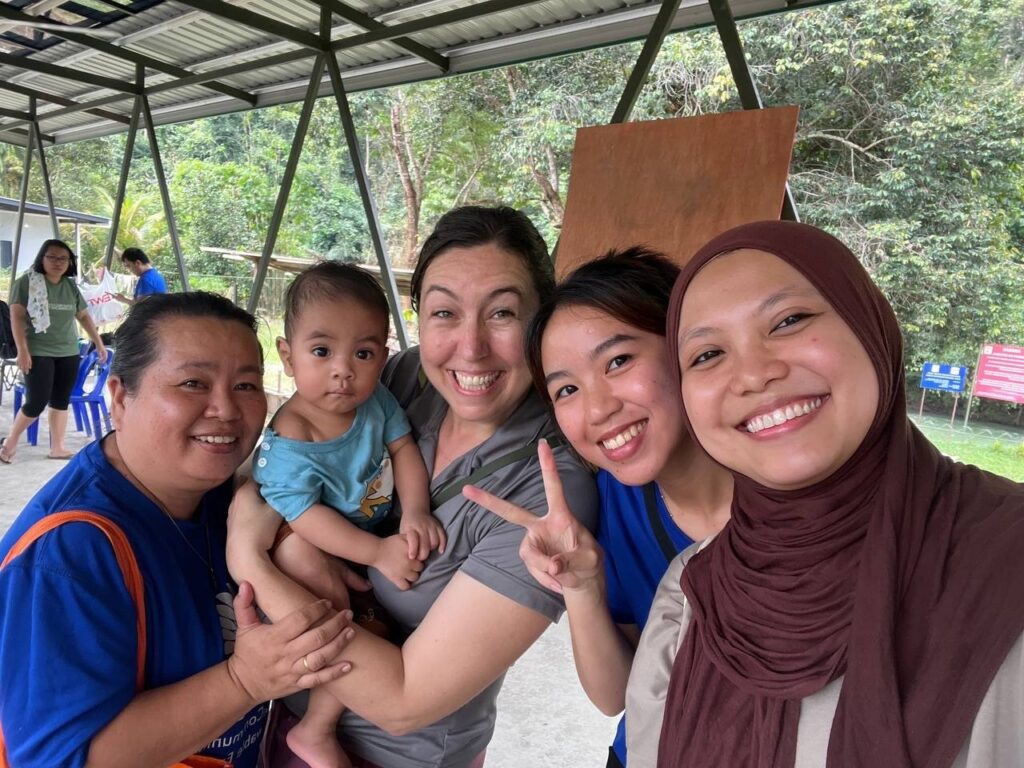
A closer look at community storytelling by Geo Corneby, Asia Program Director and Mica Miro, Engagement Director, at Green Empowerment
Follow Pokolon Paus’ Journey Here
What is community-led storytelling? We saw it in action in the village of Pokolon Paus on the island of Malaysian Borneo.
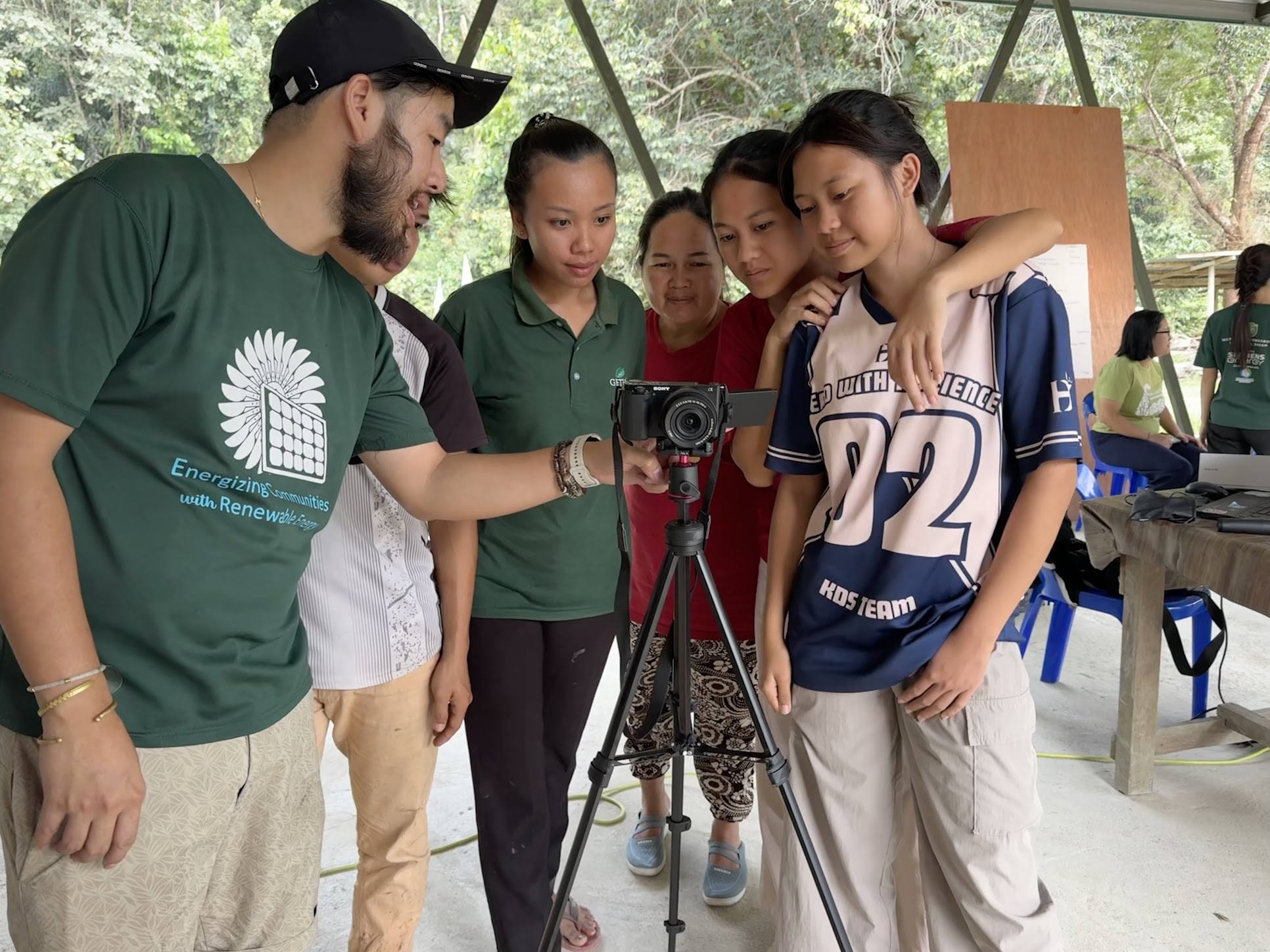
It’s mid-march 2026. I’m sitting in a blue plastic chair staring down the lens of a compact video camera with several local community members adjusting the shutter speed and aperture. Directly behind them I see the grey blue Tagal river streaming by with a background of lush jungle. This is a moment of pure joy for me. I am used to visiting remote communities in other countries and asking locals if I can take their pictures. But today it is community members themselves who are picking up the cameras and thinking about how they want to craft their own story.
Just this morning we were setting out chairs in the open air community hall and wondering if anyone would show up. We are in Pokolon Paus, a remote Dusun community in Sabah, Malaysia where the local community is working with our partner TONIBUNG to build their own community-wide energy system. Communal work days are nothing new here, but today is a little different. Today the workshop is optional. The invitation is to come learn about filmmaking and the potential to tell your own story.
Why Community-led Storytelling? Why Now?
Mica:
I first heard about community-led storytelling at a 2025 NYC Climate Week event. The core principle is that the people that a story is about take the lead in telling, recording, and shaping the narrative, rather than having outsiders -journalists, filmmakers, communications staff)-tell it for them. In filmmaking this can mean training community members to use camera equipment, conduct interviews with each other, choose a narrative focus, and ultimately edit their own film.
As the Engagement Director at Green Empowerment, an international NGO that supports rural and Indigenous communities to build their own clean water and renewable energy infrastructure, I spend a lot of time thinking about how to share authentic stories that will inspire supporters. So the idea lit me up.
Immediately I could see how community-led storytelling aligns with our values as an organization. In Green Empowerment’s energy and water programs community members are involved from the start to the finish. We believe that the community must be deeply involved in planning and implementation to ensure long term sustainability. They are truly the decision makers along the journey, so why not relinquish more control over how we share this journey?
Equally important, I had been hearing more and more from board members and supporters that they were yearning to hear directly from community members. Modern technology has both given us a taste for direct communication and filled our feeds with advertising and AI generated content. People are hungry for real voices and genuine connection. Community-led storytelling seemed like a potential answer to this call, that also explicitly puts local community members’ opinions and preferences at the forefront.
Setting Up the Pilot
Mica:
For me, this idea was brand new, and I immediately went looking for outside support to help us figure out how to set up a pilot. I talked to peer organizations pursuing this type of storytelling and even had a meeting with one of the premiere media companies promoting community-led storytelling, If Not Us Then Who.
Finally I set up a meeting with our Asia Director, Geo Corneby, ready to pitch the idea and then then problem solve on outside support that we could bring in to help us run a pilot.
Geo:
There was no question that Sabahan filmmakers would know what to do. For years we’ve been working with the creative community in Sabah. They’re behind all the content that helps drive our advocacy efforts around community-based energy access. Their work supported the successes of the Sabah RE2 Roadmap, a program for 100% energy access in the least electrified region of Malaysia. I was excited to introduce Mica to Kenneth Lo of Third Rice Culture, a creative firm in Sabah specializing in community-driven storytelling and social advocacy. Like always, people on the ground show us the way.
Mica:
This was a humbling moment. Along with community engagement, long-term partnership with local organizations is core to Green Empowerment’s approach. But I had not thought to ask our partners or even our own team before looking for outside support. This is a common pitfall of US organizations, thinking we need to bring in outside expertise to pilot something new, before investigating whether there is already local expertise that can teach us about the work. Colonial habits are hard to break.
Luckily I have many international co-workers to help me course correct.
A Global Perspective
Geo:
In general, we’re all better off if everyone is free to choose the best solution to their problems. Unfortunately, this isn’t the case in the economics of aid. The funders (or buyers) of interventions are not the end users. Because of who holds power in these dynamics, communities often do not decide the interventions they implement, who they work with, and how resources are distributed.
The exciting development is that more and more actors are presenting alternatives to the imbalanced dynamics in aid flows. This includes models of trust-based philanthropy, emphasis on local leadership, and the movement for community-led development.
Community-led storytelling is part of this movement. As communities own their narratives, they can speak to the positive,or negative, impact of interventions. It enables them to cast a vote on the products and services that they want the most. The approach goes beyond genuine stories, it’s about reclaiming dignity and power.
Free, Prior, and Informed Consent (FPIC)
Geo:
It was an easy decision to work with Kenneth and our Sabah RE2 partners – TONIBUNG, PACOS Trust, Forever Sabah, and Energy Action Partners. The rest of the process was about making things happen with our partners and the community. Kenneth designed an 8-month program, with filmmaking and storytelling workshops for community filmmakers and timelines for filming content and editing.
TONIBUNG and PACOS Trust first consulted the community of Pokolon Paus about a pilot project. This precedes any of our work with community partners and aligns with the principles of Free, Prior, and Informed Consent (FPIC) advocated by Indigenous groups and grassroots networks. In simple terms, is the community interested in this project?
Very quickly after they approved, our partners requested to open up slots for neighbouring communities. “We want them to have the option to tell their own stories,” TONIBUNG shared.
Let’s end with the beginning
Mica
When we finally arrived in Pokolon Paus with Kenneth and team members from TONIBUNG, we were excited to get started, but also a bit nervous. Would community members show up for this?
The morning unfolded slowly as a few teenagers, young adults, and mothers started to gather and see if the work might interest them. By mid-morning a core group had formed. Kenneth was leading the workshop in Malay. Though I could not understand a word of what he was saying, I could see interest and engagement starting to build.
When he got out the cameras, sound and lighting equipment, the group became fully absorbed in learning new technical skills.
Geo:
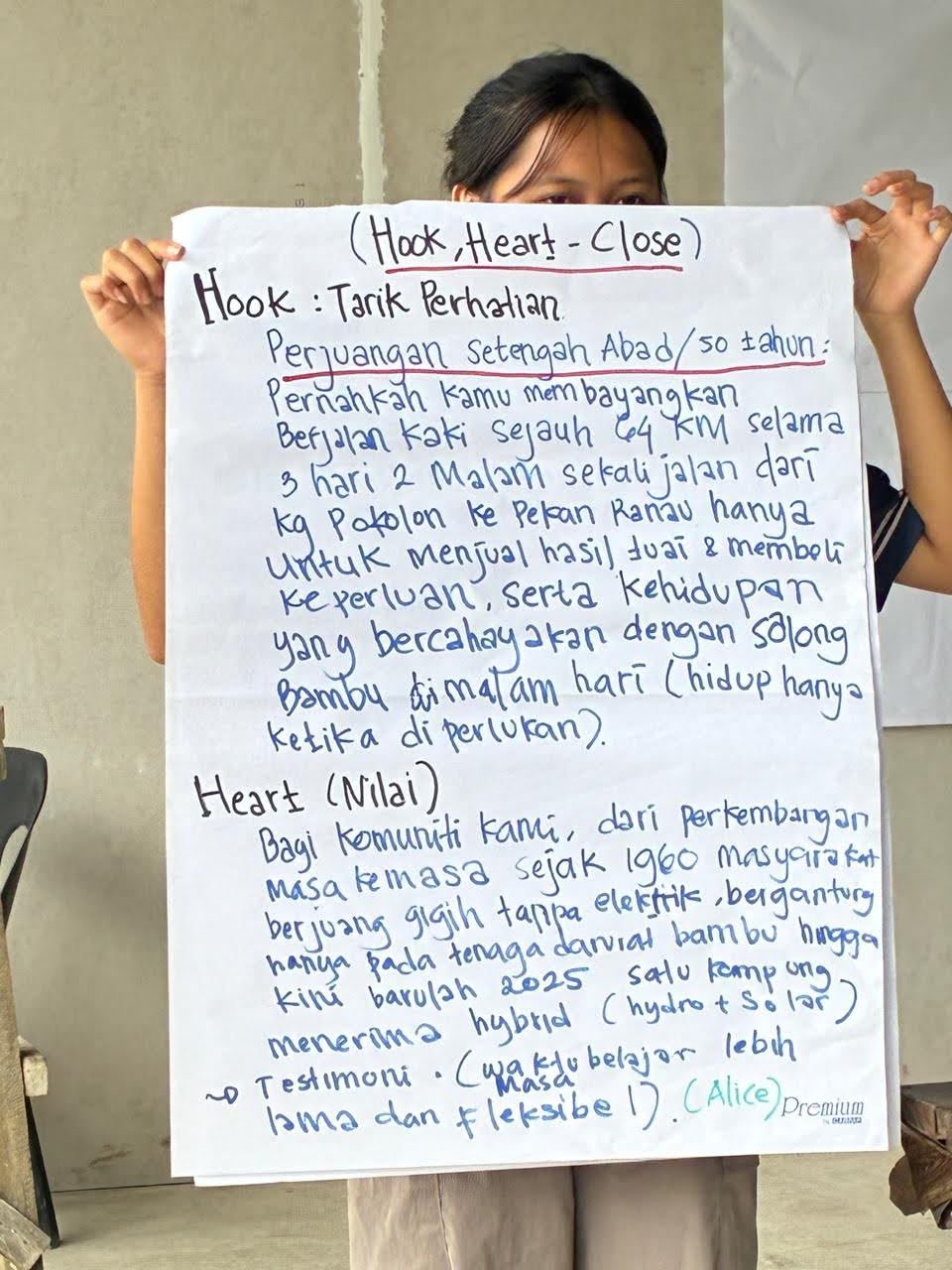
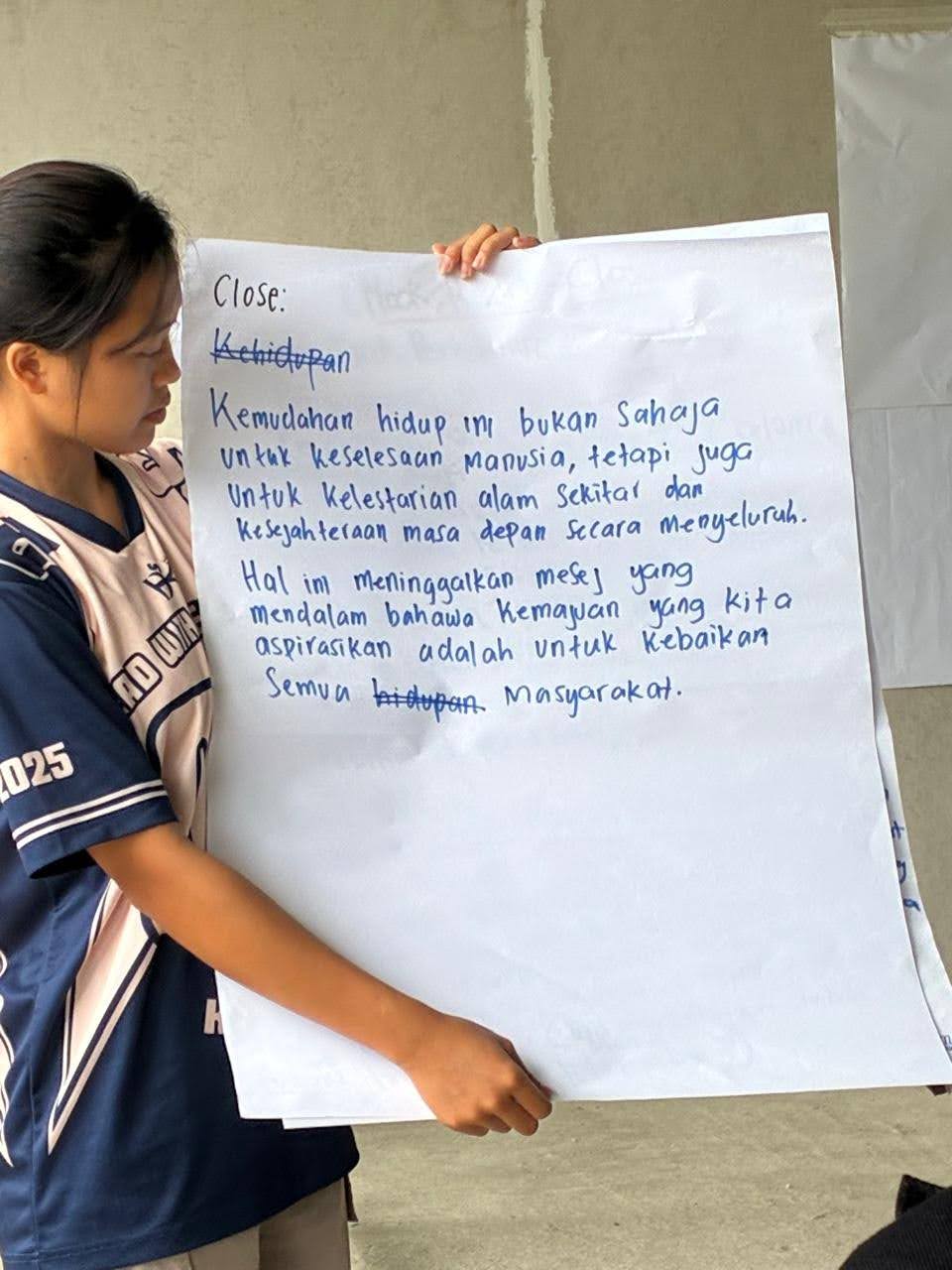
One of the first activities at the workshop was to develop a story outline. Participants learned about the “hook, heart, close” story structure, and outlined a potential short film. From a group’s outline for “50 Years of Energy Access:”
- Hook: “A struggle of half a century. Have you ever imagined walking for 3 days and 2 nights from Pokolon village to Ranau town to sell harvests and buy necessities? Life was illuminated by bamboo poles at night, lit only when [really] needed.”
- Heart: “For our community, since 1960, we have struggled without electricity. In 2025, this changed with the development of a solar-hydro hybrid mini-grid.”
- Close: “These living facilities are not only for human comfort, but for environmental sustainability and everyone’s overall wellbeing. This leaves a profound message that the progress we aspire is for the good of all beings in society.”
Isn’t it beautiful when they tell their stories themselves? This voice needs to be heard. Even as an experienced grant writer, I don’t think I’ll be able to do justice to the wisdom in the perspective of community storytellers.
My hope is for audiences to receive the wealth of all that communities can teach us. To start, they are not passive beneficiaries. They are dignified actors who have plans, strategies, ambitions, and big dreams for ‘the good of all beings.’
Learn More about Pokolon Paus and follow their Community Led Storytelling journey here!
Note: We would like to thank our partners in Malaysia, Third Rice Culture Media, TONIBUNG and Pacos Trust for leading us in this pilot project, and Health in Harmony and If Not Us Then Who for introducing us to Community Led Storytelling at that NYC Climate Week event.
This article is the first in a three-part .ORG Learning Center series in collaboration with Green Empowerment exploring what community-led storytelling looks like in practice. Over the coming months, we’ll follow an innovative initiative in Sabah, Malaysia, through the perspectives of the organization, the filmmaker, and the community members themselves. Together, these stories examine how shifting ownership of storytelling to the people living the experience can build trust, strengthen authentic partnerships, and create more meaningful narratives that reflect the voices of the communities at their center.