
How one organization is dismantling human trafficking in India: one life, one community, and one step at a time.
In the heart of Mumbai, there are neighborhoods that most people walk past without looking twice. But Aaboo Varghese, Founder & Executive Director of Purnata, looked, listened, and heard the stories. He heard of young girls sold before they had the chance to know childhood and of women trapped in cycles of exploitation with no clear way out. Once he heard these stories, he refused to let them go.
That restless, grief-fueled determination gave rise to Purnata, a nonprofit organization rooted in Mumbai and West Bengal, India. Its name means “wholeness” or “completeness” in Sanskrit. Everything Purnata does is built around a simple belief: that every person, no matter where they come from or what has been done to them, deserves to be made whole.
Human trafficking is not a single event; it is a system, and Purnata approaches it as one. “When I first looked at human trafficking, I looked at it not only as a heinous crime, but realized there are areas where women and children are constantly being trafficked from and taken to,” says Varghese. “I realized that prevention had to be done at the source, in transit, and at the destination.” The organization’s strategy addresses three interconnected points: reducing vulnerability among potential victims in source areas, increasing risk for traffickers along transit routes, and decreasing demand at destination points. This isn’t just theory; it shapes how Purnata deploys its teams on the ground every single day.
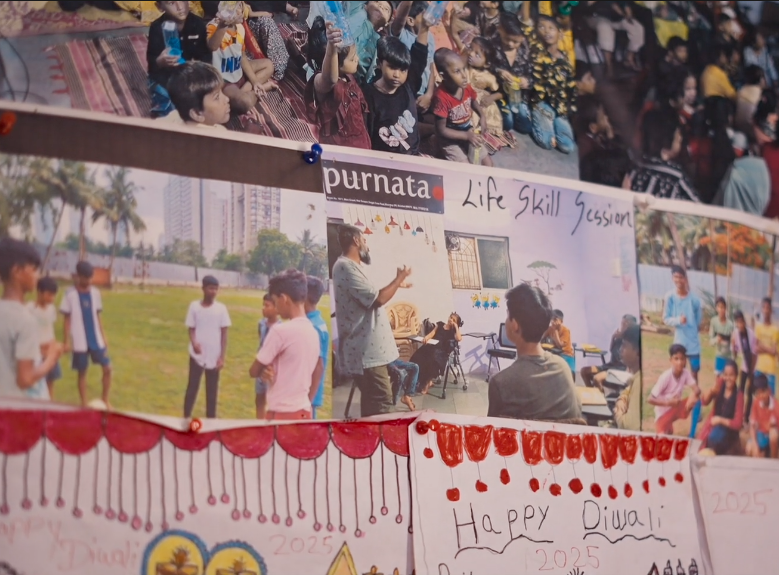
In West Bengal, where some villages carry an acute vulnerability to trafficking, Purnata works directly within the communities. By ensuring children stay in school, receive counseling, and develop career-focused skills, Purnata works to break the cycle before it begins. Families become partners, and communities become their own first line of defense.
For Purnata, rescuing a victim from human trafficking is only the beginning of their work. Rescued individuals are welcomed into Purnata’s Rehabilitation Home, a safe space offering housing, food, clothing, and healthcare. Beyond meeting immediate needs, the Home is a place of genuine recovery. Women and girls who arrive frightened and overwhelmed are surrounded by care as they find their footing. Staff walk through legal processes with them, provide counseling, and advocate fiercely on their behalf.
From the Rehabilitation Home, many women move into Purnata’s Training Center in Asalpha, Mumbai, where a six-month program builds practical literacy, life skills, and livelihood readiness. “The goal is independence, the ability to re-enter society on their own terms, with the confidence and capability to thrive,” says Anagha Khandagle, Senior Program Manager at Purnata.
Purnata operates from the conviction that wholeness is not just the absence of suffering. It is the presence of dignity, agency, and belonging. It is a woman who completes an adult literacy course and opens a small tailoring business, a child who stays in school and grows up knowing she was worth protecting, a community that recognizes traffickers before they can act, and says: not here, not our children.
These outcomes don’t happen by accident. They happen because of a team that believes there is too much suffering in the world to wait to be told to do something. They go the extra mile, not out of obligation, but out of love for people whose names they know, whose stories they carry.
“The resilience and courage these women and children have to face the trauma and exploitation they have gone through gives me the hope and motivation to keep going” says Souvik Sarkar, Senior Program Manager, West Bengal at Purnata.
You can learn more about Purnata’s work, read survivor stories, and support their programs at Purnata.org. Whether through a donation, a partnership, or simply by raising awareness, you can become part of this larger effort. Because wholeness, for all, is worth fighting for.